
Car rental companies in Cabo Verde operate slightly differently from the usual way, as each island can function almost like a separate rental market. Rental cars normally stay on the island where they are collected, because suppliers may restrict taking vehicles between islands. Some inter-island ferries can carry vehicles, but you must have the rental company's permission before taking a car on a ferry.
Renty compares live self-drive car rental Cape Verde/ Cabo Verde options from local rental companies, with price and terms shown before you book. This gives you a wide range of rental options without having to contact each rental company separately.
Praia, the national capital on Santiago, is Cabo Verde's main hub, with pickup at Nelson Mandela International Airport and around the city. Most visitors land instead on Sal or Boa Vista, where Santa Maria and Sal Rei are the pickup towns for two resort islands built around all-inclusive hotels, kitesurfing, and beach time. In Santa Maria downtown, a rental car is useful for reaching beaches, restaurants, and areas outside the main resort zone. A car hire there usually covers a day or two away from the resort rather than the whole stay.
Santiago's roads run hillier through the interior, with cobblestone streets common in older town centres and longer routes, like the drive from Praia toward Tarrafal, cutting through rising ground. A compact car handles most of this without trouble. Santiago is also where Renty's Cabo Verde listings currently span the widest range of brands and tiers.
Sal and Boa Vista are flatter and easier to drive. The road might turn slippery during the rainy season, roughly August to October, and Saharan dust haze, known locally as bruma seca, sometimes cuts visibility on Boa Vista between December and February.
A passport and a valid home country driving licence cover it for most visitors. Rental companies may have additional requirements, including a minimum driving experience or an International Driving Permit. If your licence doesn't use Portuguese or Latin script, carry an International Driving Permit alongside it, and pack one anyway if you have it, since some suppliers ask for it regardless.
Residents can skip the passport entirely. A National ID Card and a valid driving licence cover it instead. Minimum age is 21 for most suppliers, though some accept drivers from 18, and a young-driver fee is common under 25.
Deposit amounts vary by car model and supplier. Car rental Cape Verde or Cabo Verde companies normally charge the security deposit to the main driver's credit card and confirm the amount before checkout. Basic collision and liability cover comes standard on most listings, with fuller protection available as an upgrade. Photograph the car's condition before driving off on any island, so existing wear or damage is on record before you return it — worth doing everywhere, but especially before heading onto Sal or Boa Vista's unpaved stretches. Free cancellation is usually confirmed separately on the card by the rental companies.
Pricing and Booking
Suppliers typically take the deposit on the main driver's credit card, though a debit card works for some listings — check that specific listing before booking.
Rates vary by island and season. Sal and Boa Vista, the two most tourist-heavy islands, run higher demand and pricing from December through April than Santiago does. Booking a few weeks ahead tends to secure better rates, since fleets on the smaller islands are limited.
No. None of Cabo Verde (Cape Verde) islands run toll roads, so no vignette or road-charge payment applies to a rental car anywhere in the country.
Driver Requirements
A passport and a valid home country driving licence, good for up to six months from your date of entry. An International Driving Permit may also apply, depending on your licence and the supplier.
It depends on your licence and the supplier. If yours doesn't use Portuguese or Latin script, plan to carry one. Even if it does, some suppliers ask for it as their own policy, so packing it removes any risk of a problem at the counter.
21 for most suppliers, though some accept drivers from 18. A young-driver fee is common under 25, and the exact cutoff for a specific car shows on its listing.
50 km/h in towns and 80 km/h on the open road nationally, though the terrain does more to set your actual pace than the posted number. Santiago's hillier interior and Sal or Boa Vista's flatter coastal roads drive very differently at the same legal limit.
Cabo Verde's limit is 0.05% blood alcohol, stricter than many visitors' home countries. The simplest plan is not drinking at all before getting behind the wheel.
General Information
It depends on the island. On Sal or Boa Vista, many visitors stay resort-based and rent for a day or two to reach beaches or towns beyond the hotel. On Santiago, the island is larger and more spread out, with real driving distance between Praia and destinations like Tarrafal, so a car does more of the work for a longer touring trip.
It depends on the rental supplier. Inter-island ferries can carry vehicles, but car rentals may restrict taking their cars between islands. Check the supplier's terms before planning to take a rental car on a ferry. For a multi-island trip, a separate rental on each island is often the simpler option.
The right, the same as most of mainland Europe.
Unpaved and dune-adjacent tracks can turn slippery during rainy season, roughly August to October. These conditions are not the road adventures drivers usually seek. Paved main roads are largely unaffected, but it's worth checking local conditions before heading onto a route that looks unpaved on the map.
Not for most routes. Main roads between towns are paved and manageable in a standard car. A 4x4 or higher-clearance SUV is worth choosing specifically for sandier tracks near the dunes on Boa Vista and Sal.
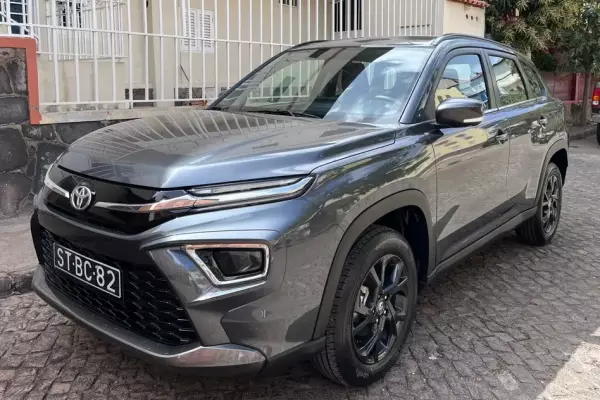
-THUMB_600x400_webp.webp "Hiring Toyota Starlet Cross in Cabo Verde")


-THUMB_600x400_webp.webp "Hiring Toyota Starlet in Cabo Verde")